

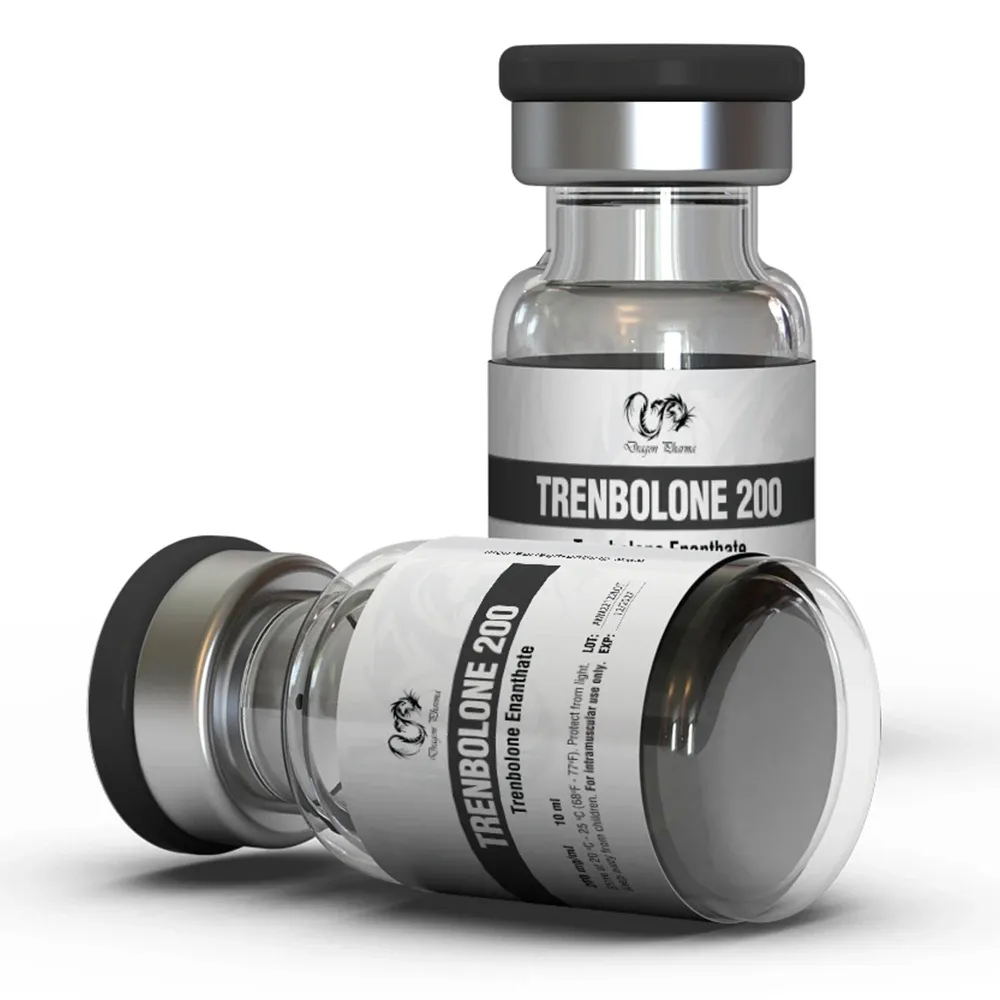
Trenbolone Enanthate 200 (1 Ml Vial 200 Mg / Ml )
$95.00
Trenbolone Enanthate is a veterinary steroid never approved for human use. Learn the severe health risks, documented side effects, and why this potent compound threatens cardiovascular, renal, and mental health in bodybuilders.
Trenbolone Enanthate in Bodybuilding
An Unflinching Look at Reality
Let’s get straight to the point you’re circling around: you want to know about Trenbolone Enanthate—not the sanitized version, but the raw, unfiltered mechanics of its use. You’ve seen the whispers in forums, the jaw-dropping transformations, and the cult-like reverence. Before we dissect the protocol, let’s establish the single most important fact: this is not a human-grade substance. You are considering a veterinary-grade compound, and that distinction isn’t just semantic—it’s the foundation of every risk you will encounter.
Chemical Reality: The Engine Behind the Myth
Trenbolone itself belongs to the 19-nor class of steroids, structurally similar to nandrolone but with a critical alteration that removes the carbon atom at the 19th position. This change grants it a unique and dangerous profile: it does not convert to estrogen via aromatization, but it exhibits a strong binding affinity to both androgen and progesterone receptors. The “Enanthate” ester is merely a delivery mechanism—a fatty acid chain attached to the hormone that slows its release into your bloodstream, allowing for injections every 3 to 5 days instead of daily.
What creates its legendary potency is a combination of factors:
-
Extreme Androgen Receptor Affinity: It binds to the receptors that trigger muscle growth with significantly greater force than testosterone.
-
Progesterone Activity: Unlike many steroids, it directly stimulates progesterone receptors, leading to a unique set of side effects.
-
Muscle-Specific IGF-1 Boost: It can increase insulin-like growth factor 1 production directly within muscle tissue.
This biochemical trifecta makes it an unparalleled anabolic agent. It is also what makes it uniquely stressful to the human system.
The Protocol: How It’s Implemented, Not Theorized
The textbook description rarely matches locker-room reality. Trenbolone Enanthate is rarely used in isolation. Its application follows a grimly predictable pattern.
The Standard Stack:
The goal is typically extreme recomposition—simultaneous fat loss and muscle gain. The stack is built to mitigate the compound’s own side effects with more compounds.
-
A Testosterone Base: 200-400mg per week. This is considered essential to maintain baseline hormonal function, as Trenbolone will shut down your natural production completely.
-
Trenbolone Enanthate: The core agent. Doses typically range from 300mg to 500mg per week for “experienced” users. The notion of a “low dose” is relative; even 200mg/week introduces a profound foreign stressor.
-
An Oral Compound: Often added in the latter half of a cycle for enhanced hardness and definition. Examples include Anavar or Winstrol.
-
The Supportive Drug Cocktail: This is non-negotiable for users attempting to manage the fallout. It routinely includes:
-
An Aromatase Inhibitor (like Arimidex) to control estrogen, despite Tren not aromatizing (it impacts estrogen sensitivity).
-
A Dopamine Agonist (like Cabergoline) to combat prolactin spikes caused by its progesterone activity.
-
Liver support supplements (like TUDCA), acknowledging the hepatic strain.
-
Cycle Structure & The Aftermath:
-
The “On” Period (10-14 weeks): A slow buildup of the compounds, with constant self-monitoring for side effects—night sweats, insomnia, elevated blood pressure, and psychological changes.
-
The Post-Cycle Therapy (PCT): Beginning about two weeks after the last Enanthate injection, this involves drugs like Clomid and Nolvadex in a tapering protocol to restart the body’s natural testosterone production. This period is often marked by a crash in mood, energy, and the gradual loss of the cycle’s visual gains.
-
The Offensive “Half-Life”: The mental and physical agitation does not cease immediately. The drug’s effects linger.
Physiological Impact: The Internal Trade
The Pursued Effects:
-
Nutrient Partitioning: This is the magic. It alters how your body uses fuel, directing more calories toward muscle tissue and away from fat stores, making recomposition possible.
-
Increased Metabolic Rate: It can elevate your basal metabolic rate significantly.
-
Enhanced Aggression & Drive: A neurological effect that translates to intense training sessions.
-
The “Dry” and “Grainy” Look: By reducing subcutaneous water and increasing intramuscular glycogen, it creates the dense, vascular, and hard physique that is highly prized.
The Inevitable Costs:
-
Cardiovascular Stress: It notoriously devastates cholesterol profiles, crushing protective HDL and elevating dangerous LDL. This accelerates atherosclerosis. It also contributes to hypertension and can induce left ventricular hypertrophy—a thickening of the heart wall.
-
Neurotoxicity: The psychological impact—”Tren rage,” anxiety, paranoia, insomnia—is a direct result of the compound crossing the blood-brain barrier and altering neurotransmitter balance.
-
Renal (Kidney) Strain: It elevates markers of kidney stress like creatinine, adding pressure to these vital filtration organs.
-
Insulin Resistance: It can impair your body’s ability to manage blood sugar, pushing you toward a pre-diabetic state.
-
Endocrine System Suppression: Your natural hormone production halts, making you dependent on exogenous hormones.
The Delayed Consequences: When the Bill Comes Due
The most dangerous myth is that the side effects end when the cycle ends. The damage is often cumulative and manifests on a delayed timeline.
-
Short-Term (During/Right After): Mood disorders, hypertension, lipid dysfunction, testosterone suppression.
-
Mid-Term (1-5 Years Later): Persistent hormonal imbalance, early-onset hypertension requiring medication, worsening lipid panels.
-
Long-Term (5-10+ Years Later): Increased risk for major adverse cardiac events, potential for lasting psychological effects, possible long-term impact on kidney and liver function.
The individual using these compounds is conducting a long-term experiment on themselves with a known dangerous substance.
The Decision: Understanding What You’re Actually Considering
Choosing to use Trenbolone Enanthate is not a simple decision about getting leaner or more muscular. It is a conscious decision to accept a significant, non-therapeutic health risk for an aesthetic and performance outcome. It is the acceptance of trading long-term systemic health for short-term physical transformation.
It involves trusting an underground supply chain with your health, self-administering a powerful chemical, and then attempting to manage the cascading side effects with additional drugs. The process demands constant vigilance over blood pressure, mood, and physical signs, all while knowing the full scope of the risk may not be visible for years.
The pursuit of an extreme physique often clashes with the principles of sustainable health. This compound exists at the violent intersection of that conflict. The question you must answer is not about dosage or cycle length, but about what level of permanent risk you are willing to accept for a temporary result, and whether the source of your goals is rooted in health and performance, or in a need that no amount of muscle can truly fulfill. The mirror reflects your physique, but it won’t show the state of your arteries, your kidneys, or your neurochemistry. Those are the real costs on the balance sheet.


Reviews
There are no reviews yet.